Raised Vegetable Garden
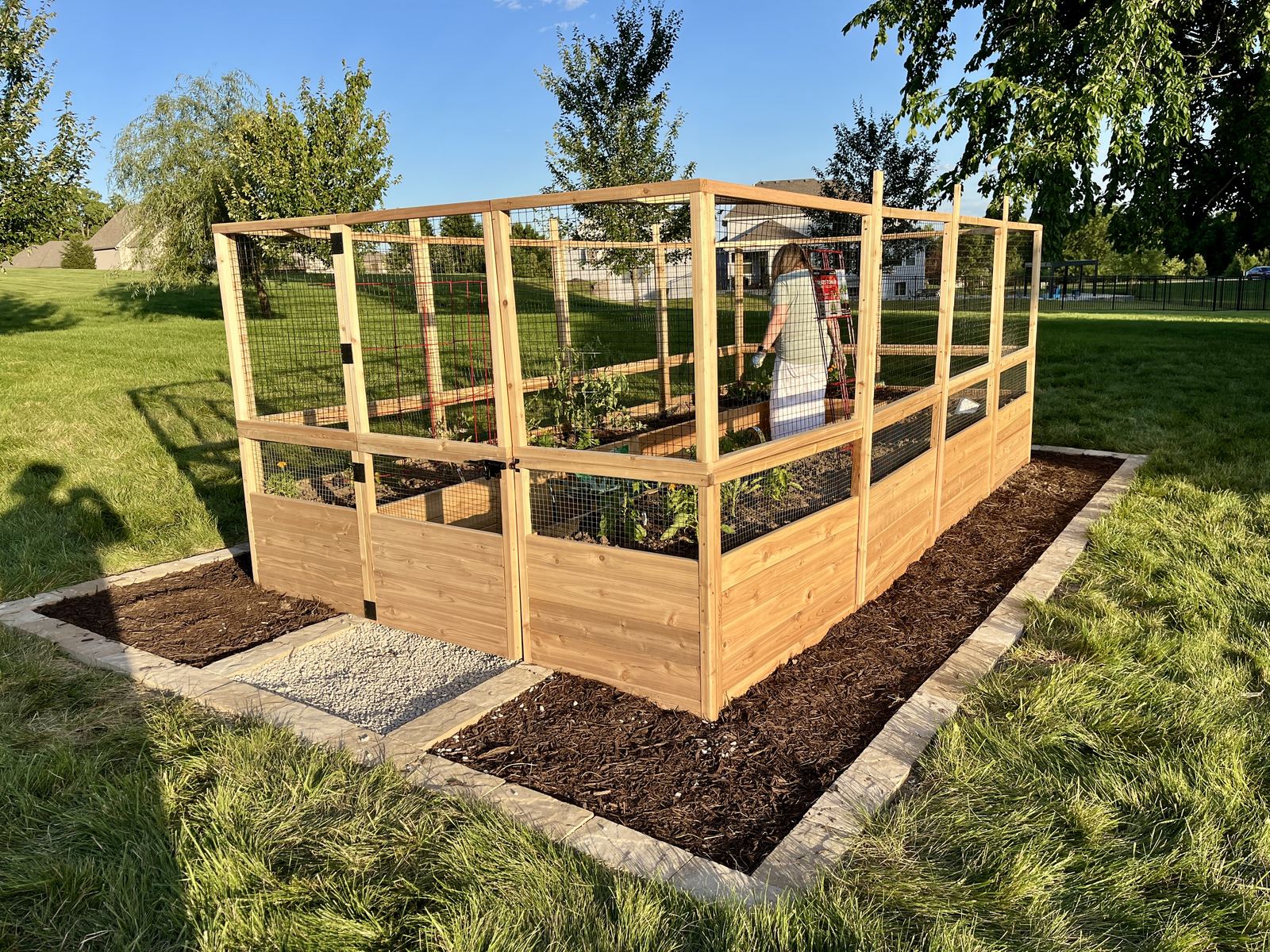
My wife and I have always wanted to have a decent sized vegetable garden, and now we have the land to do it. Rather than build a bed from scratch, we ordered a pre-cut cedar kit from Outdoor Living Today — an 8’x16’ raised garden with a deer-proof wire fence enclosure built right into the design, since deer treat an unfenced garden in our neighborhood as a standing invitation. The lumber shows up pre-cut and pre-drilled; you’re assembling panels, not building from raw boards.
Site prep
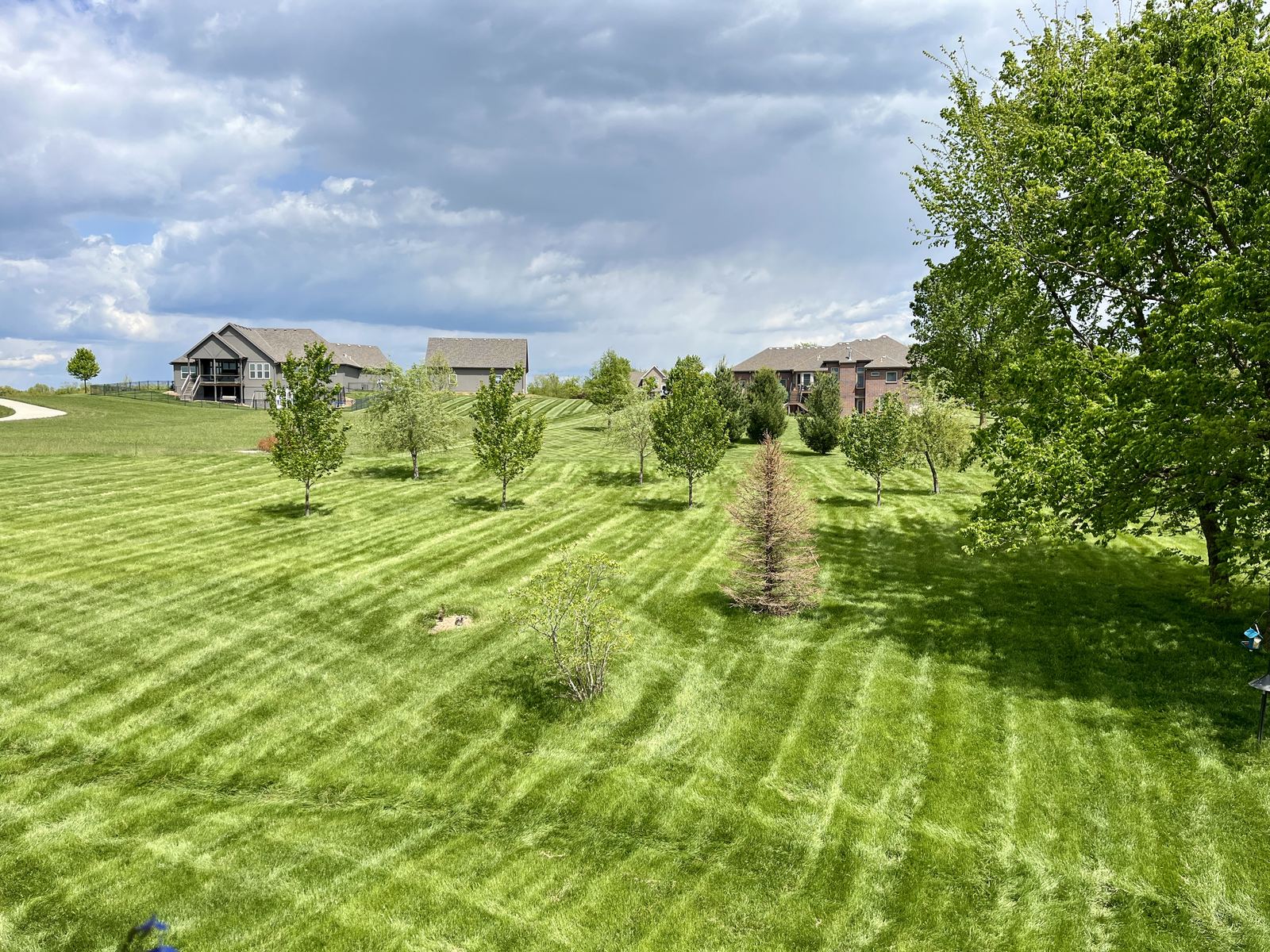
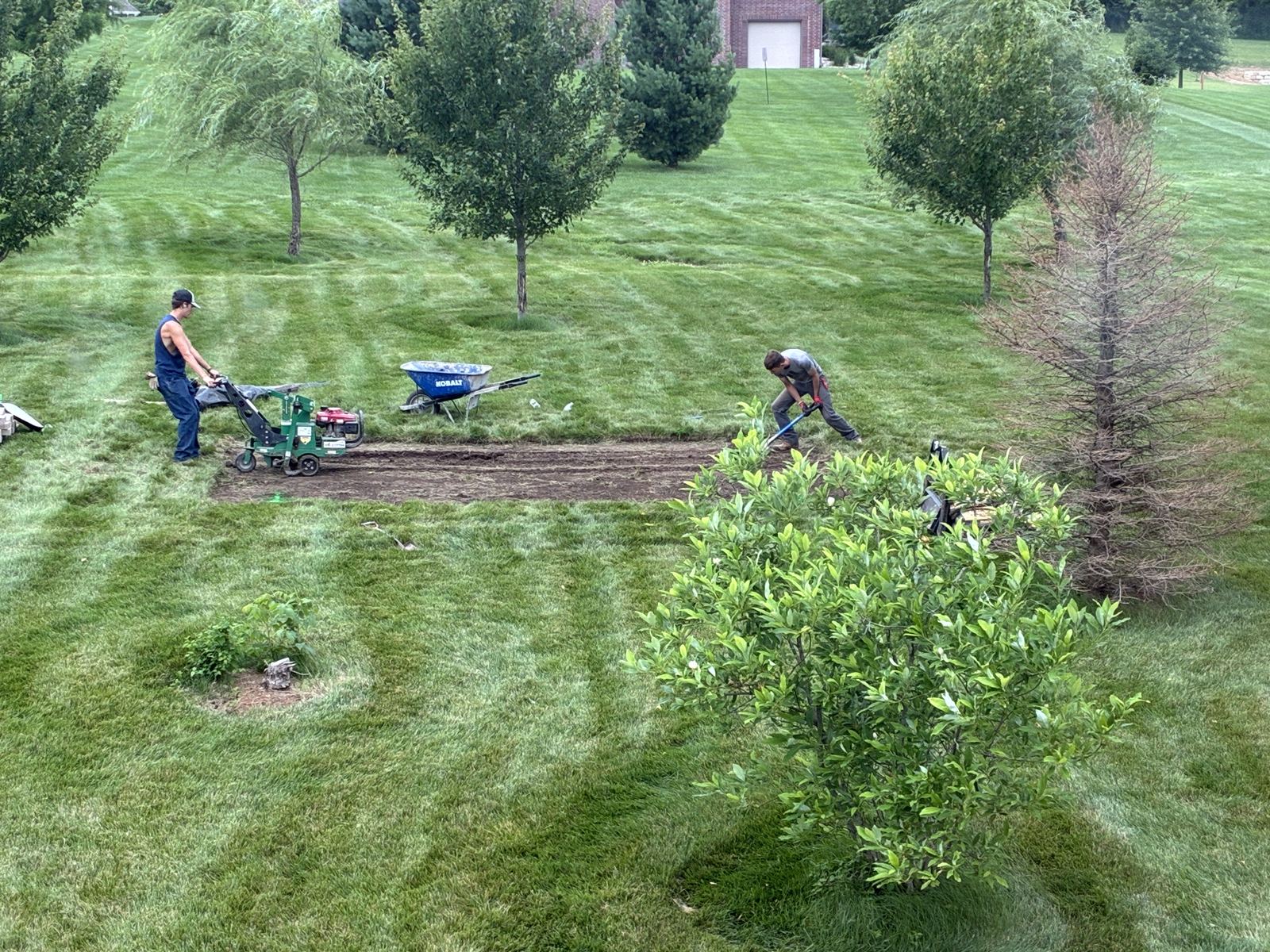
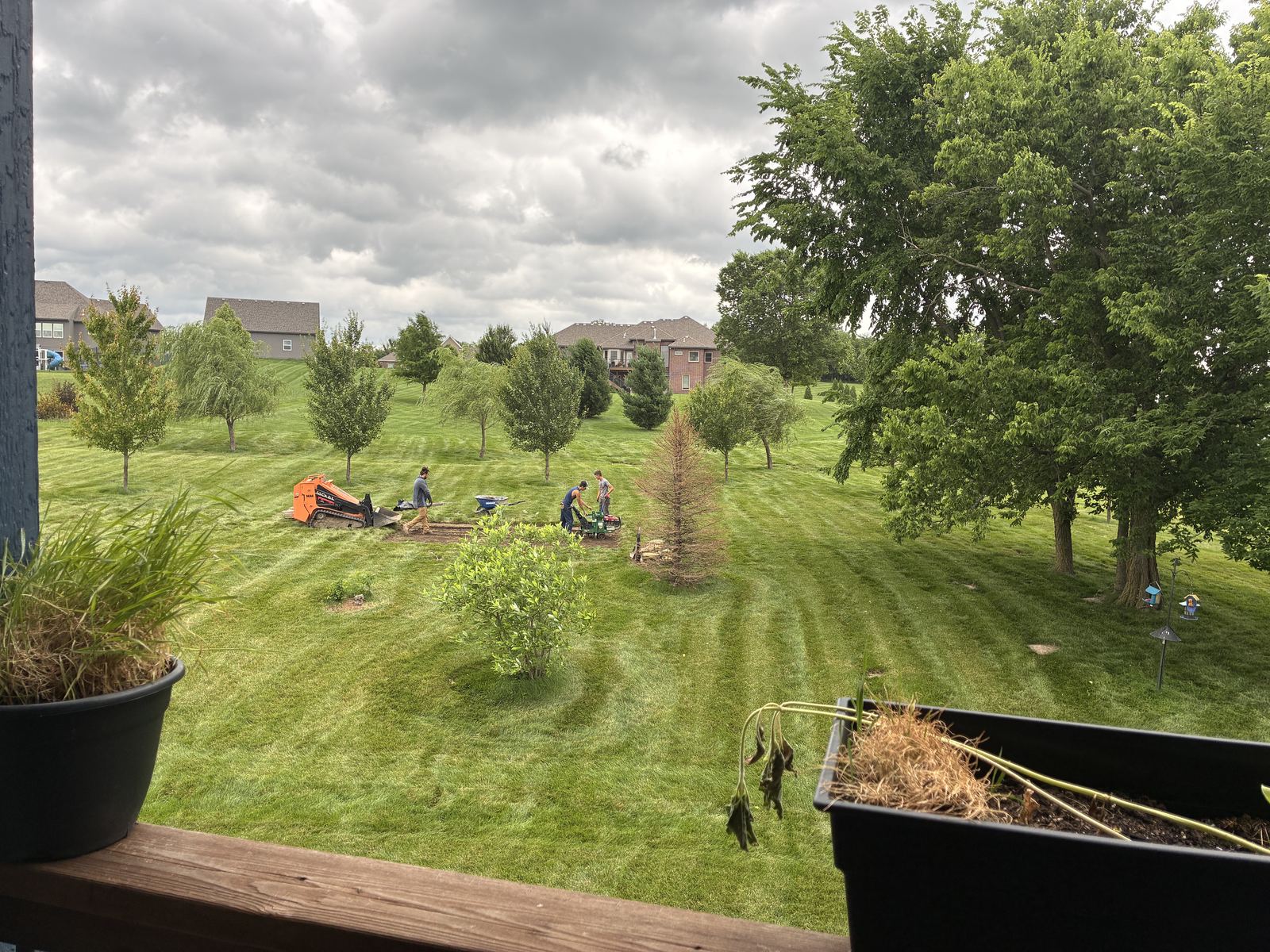
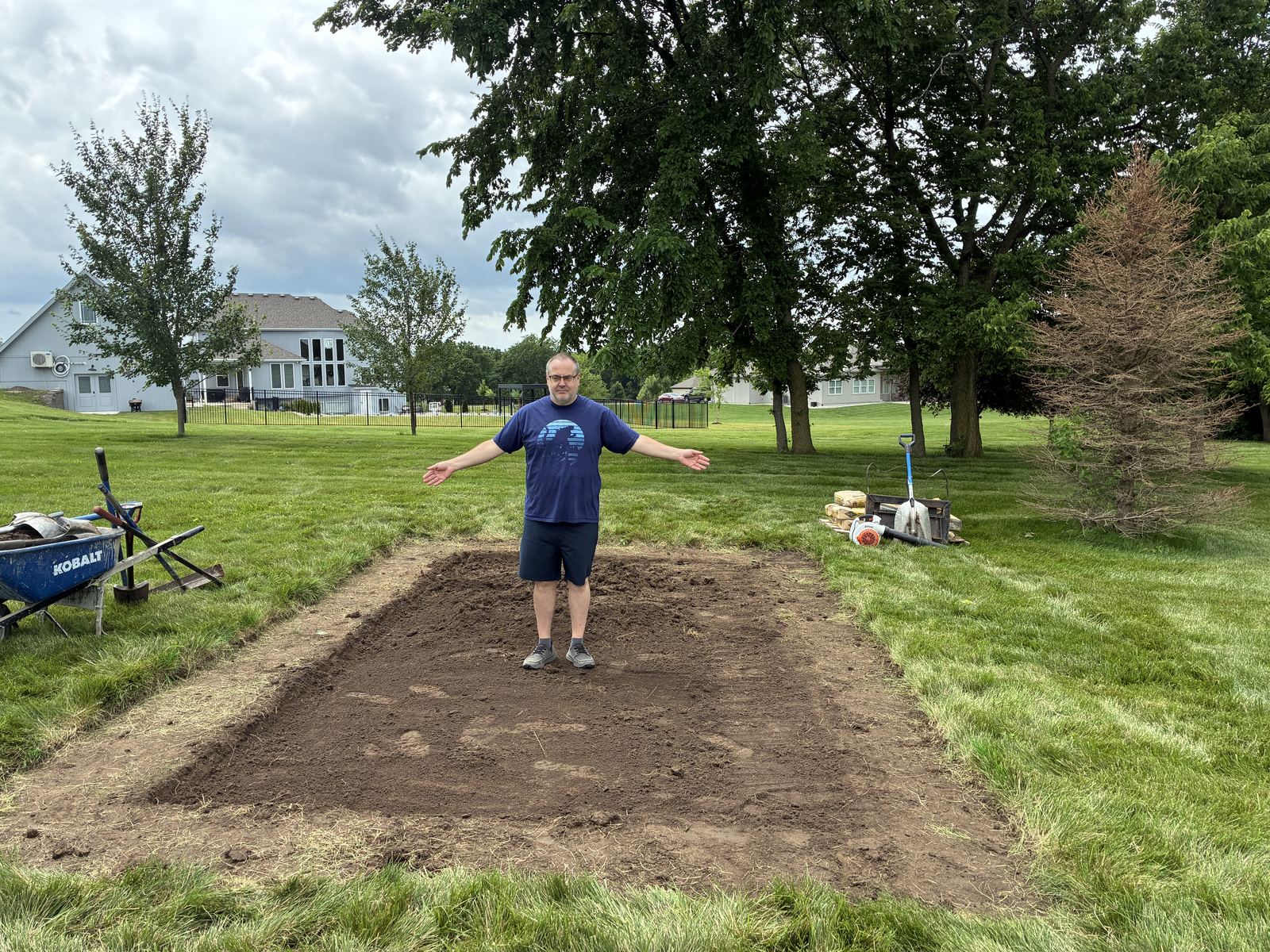
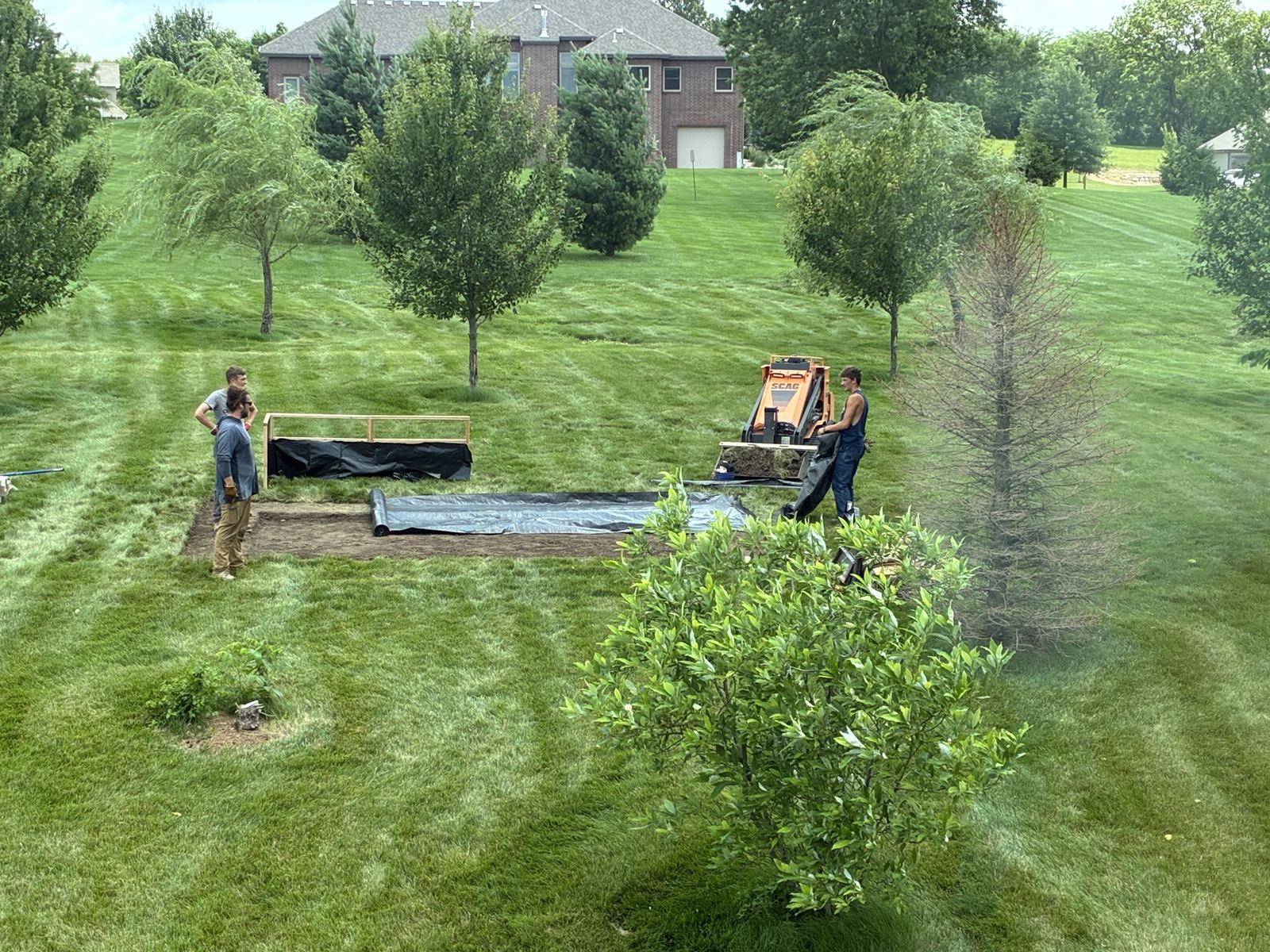
The kit needed level, cleared ground, and our backyard slopes just enough that “level” meant real grading, not just picking a flat-looking spot. We hired a local landscaping company to strip the sod and level the footprint — cutting the sod with a walk-behind cutter, hauling it off, and grading the bare dirt to a level base before building the garden with the kit.
Building it
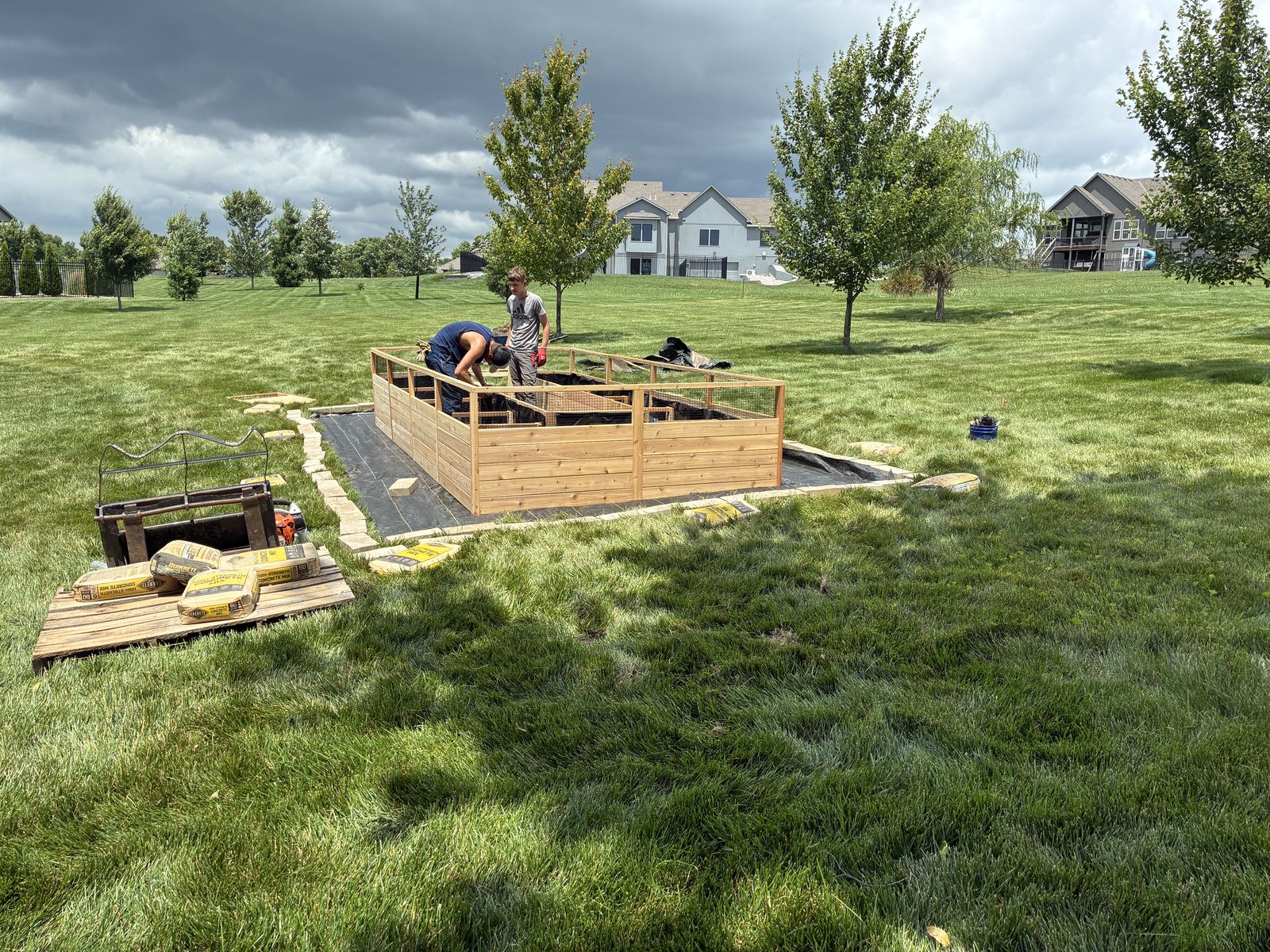
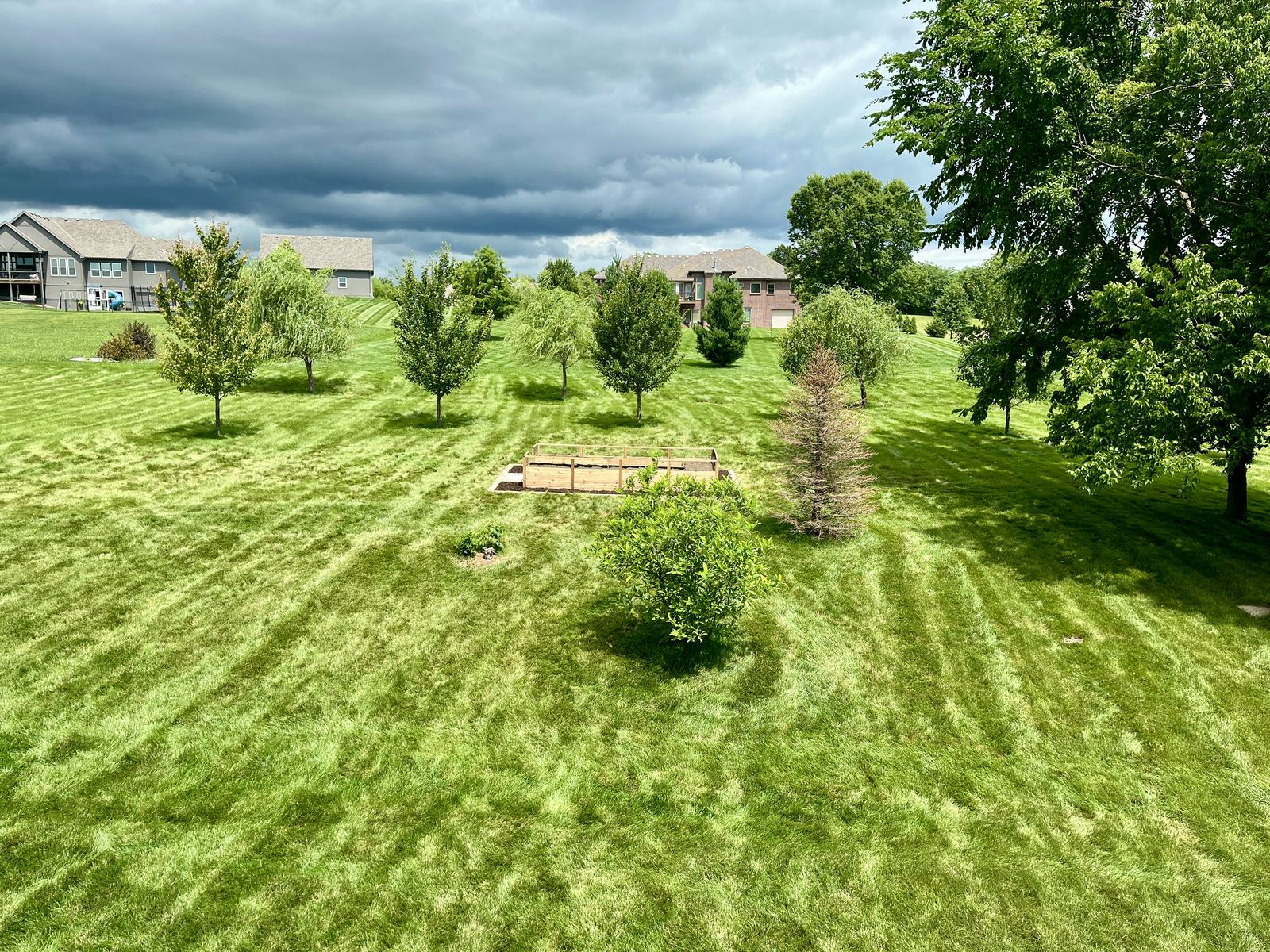
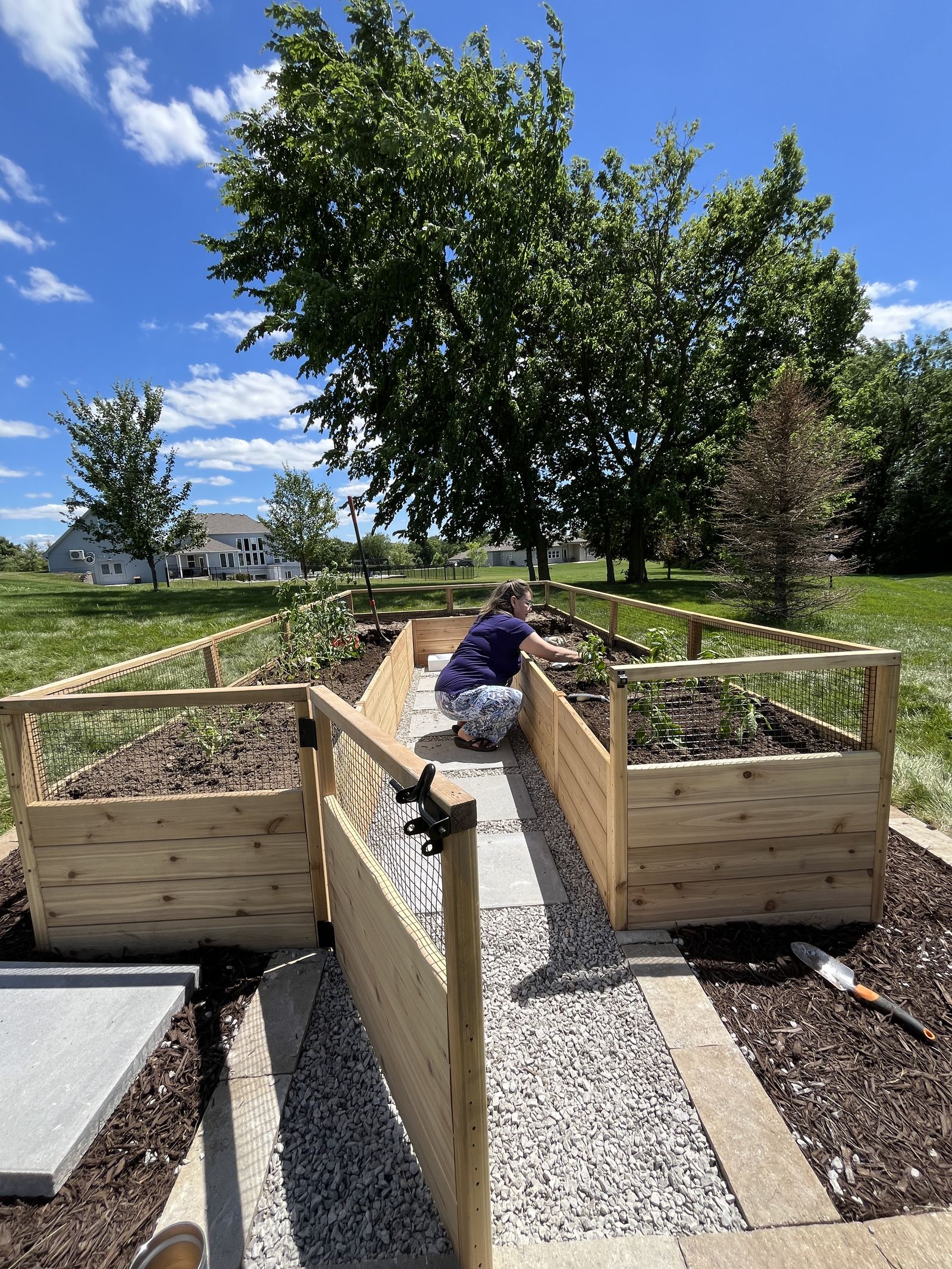
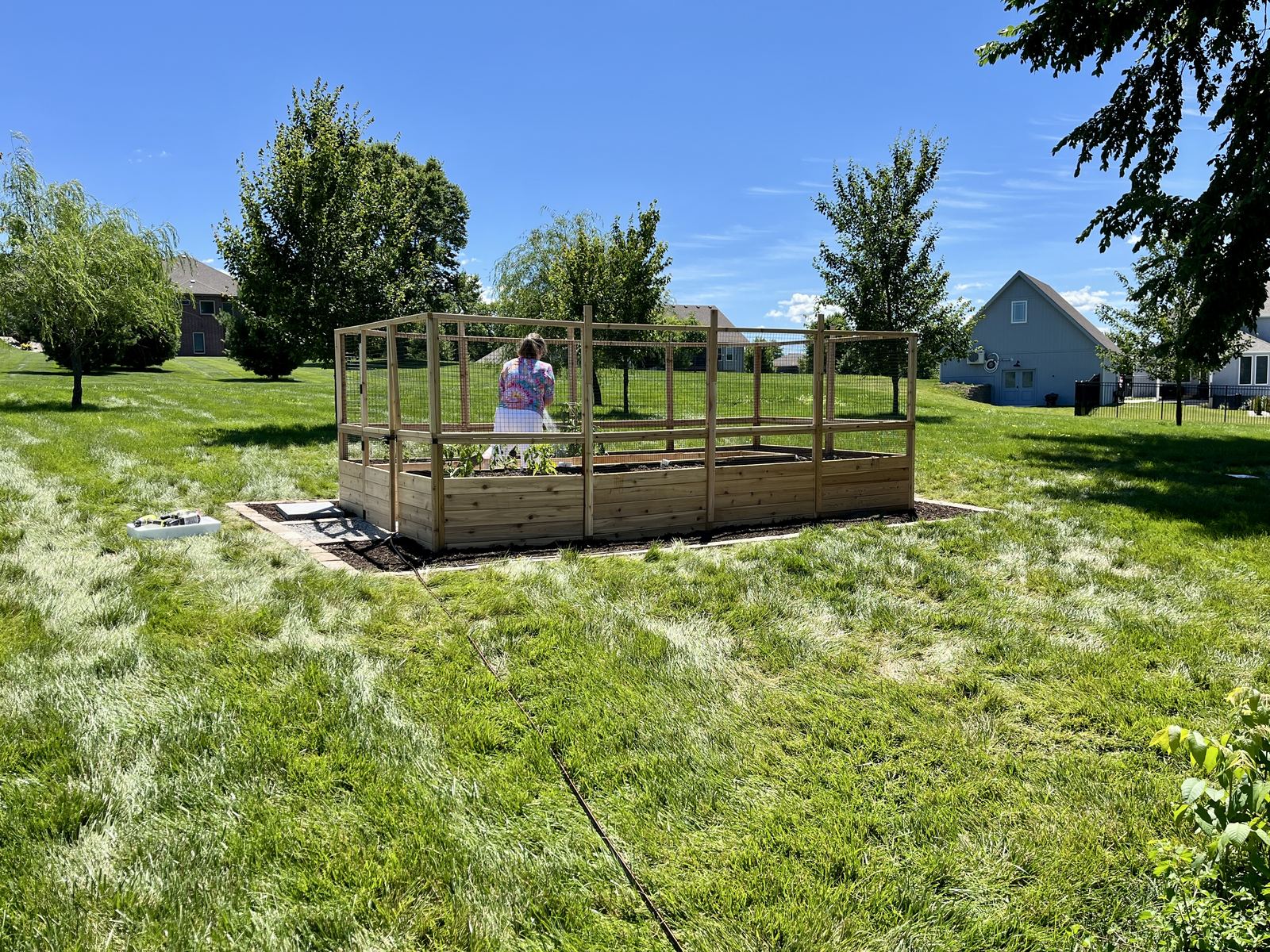
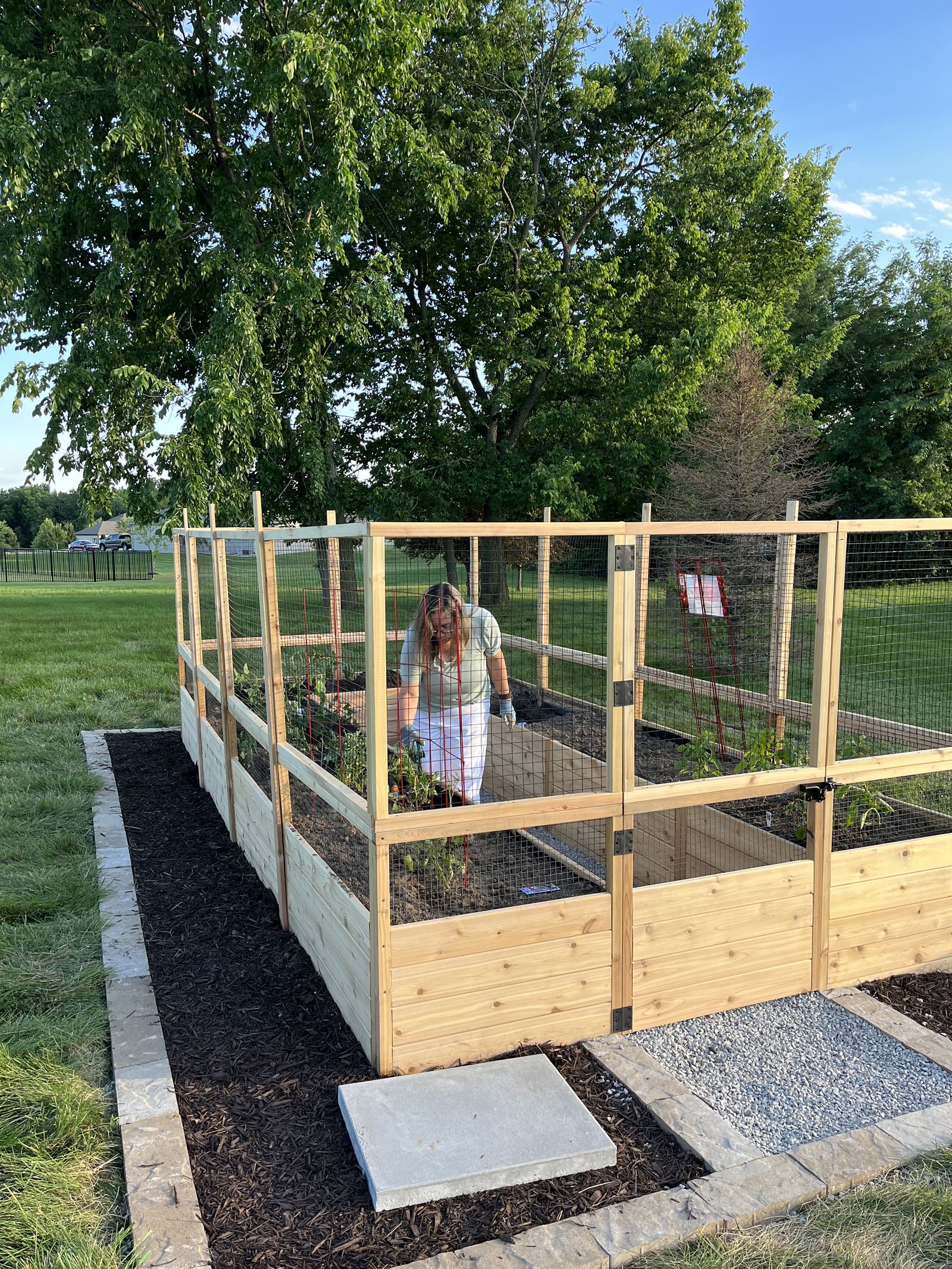
The kit itself is straightforward — pre-cut cedar boards that bolt together into wall panels, sitting on a paver and gravel base with stone edging around the perimeter. The wire mesh fence panels bolt on top of the cedar walls and fold out into a walk-in enclosure with a hinged gate, tall enough to keep deer out without blocking sun or airflow. With the help of the landscapers, my wife and I put most of it together over an afternoon.
Planting
We split the bed into rows of tomatoes, peppers, cucumbers, green beans, and squash, with marigolds tucked along the edges — as much for color as for the (debatable) pest-deterrent reputation they have. The first few weeks were mostly watering and waiting; small transplants in bare dirt don’t look like much yet.
By late summer
By late summer the bed looked like a completely different project. The cucumbers and beans took to the wire trellis panels immediately and didn’t stop, turning the fence itself into a wall of vines, and the tomatoes needed every bit of their cage supports to stay upright under the fruit.
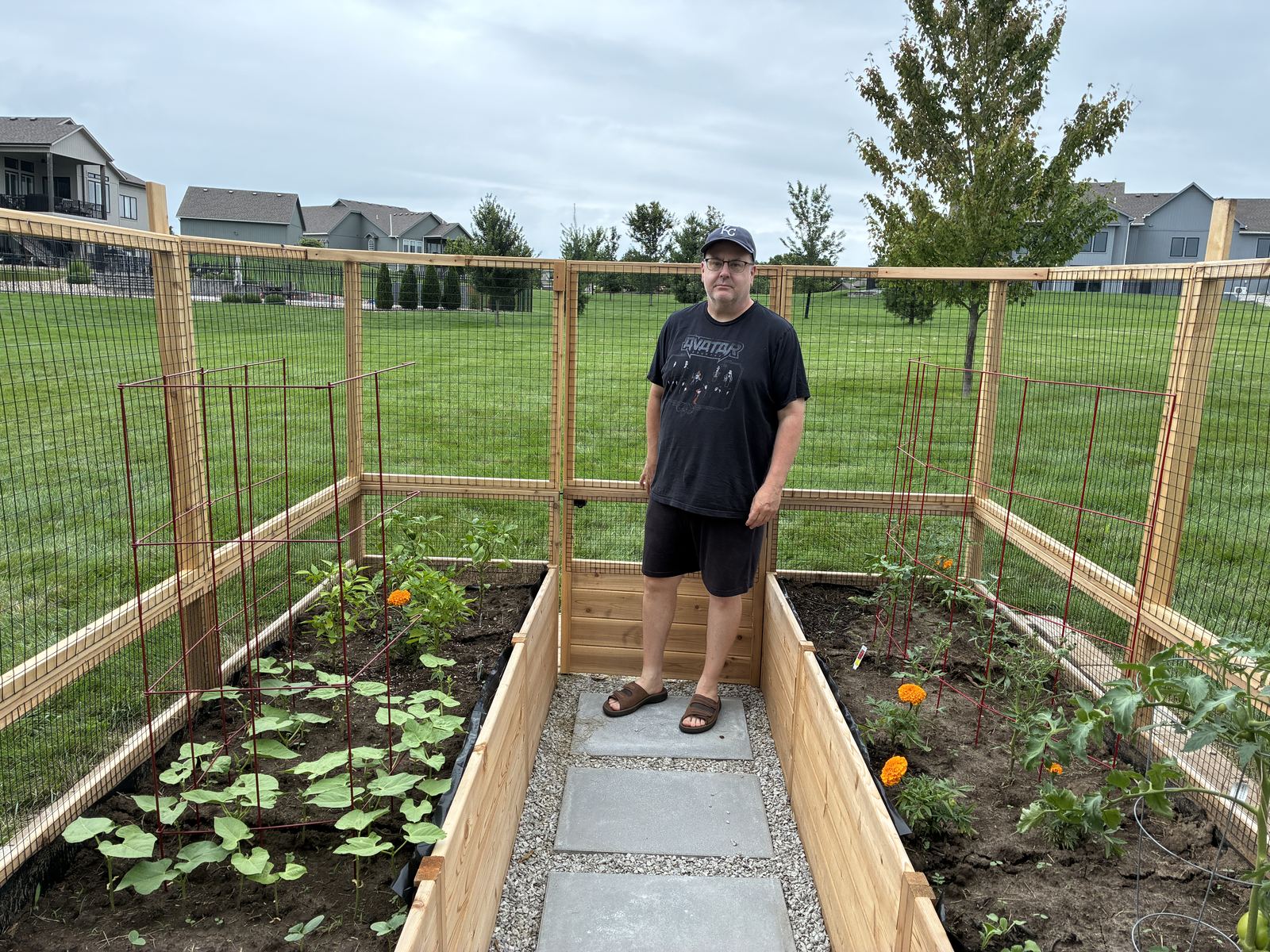
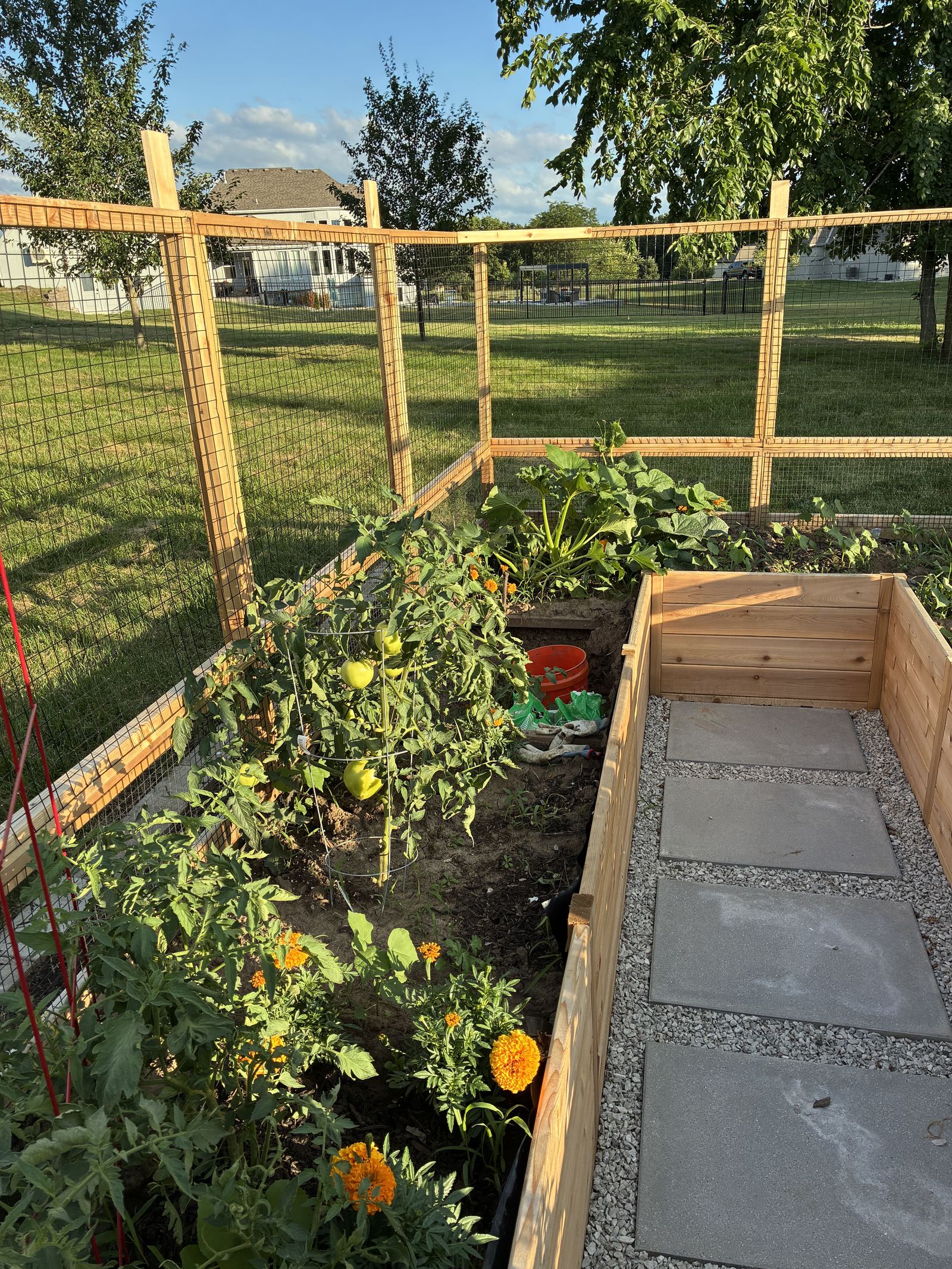
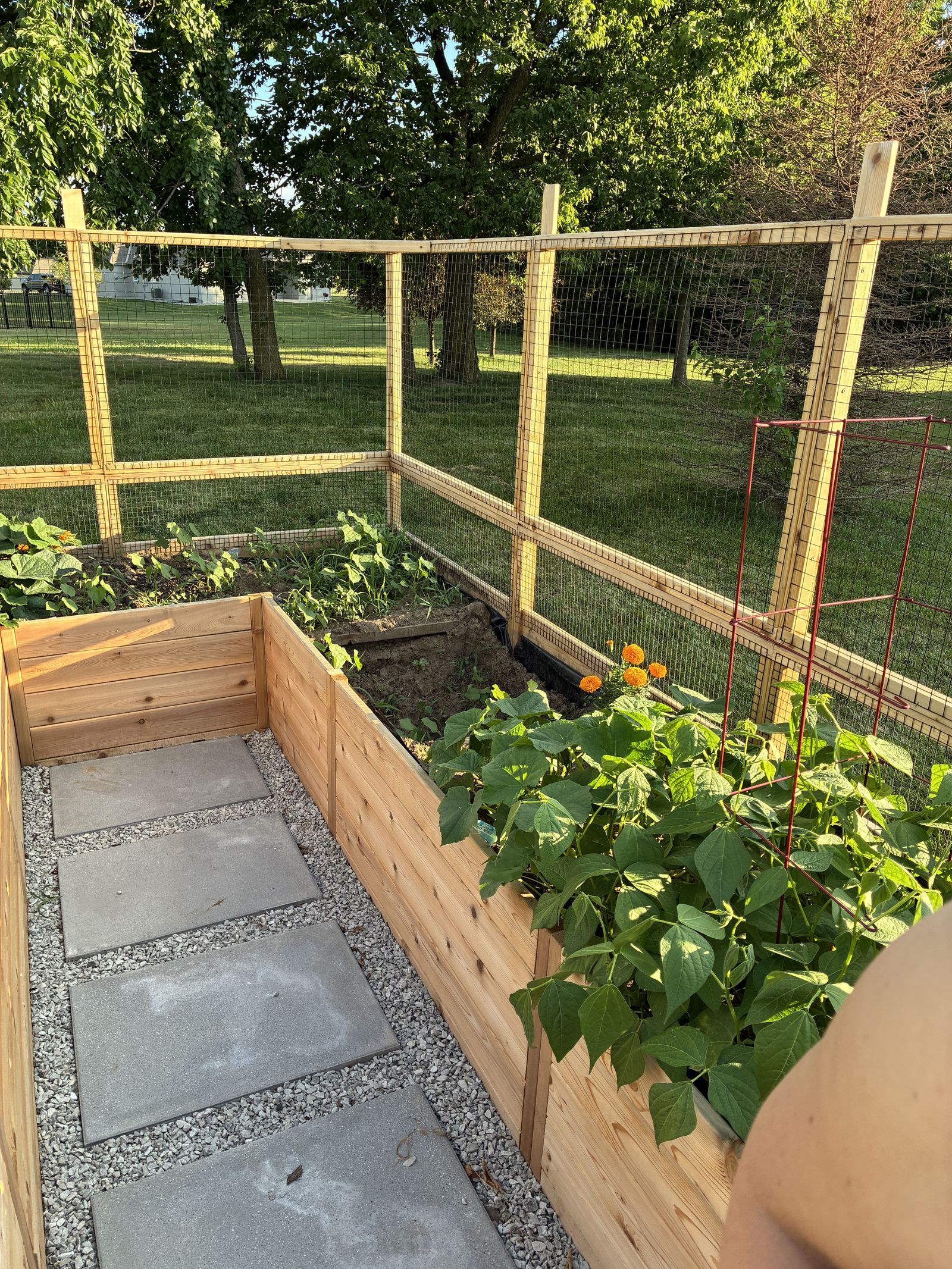
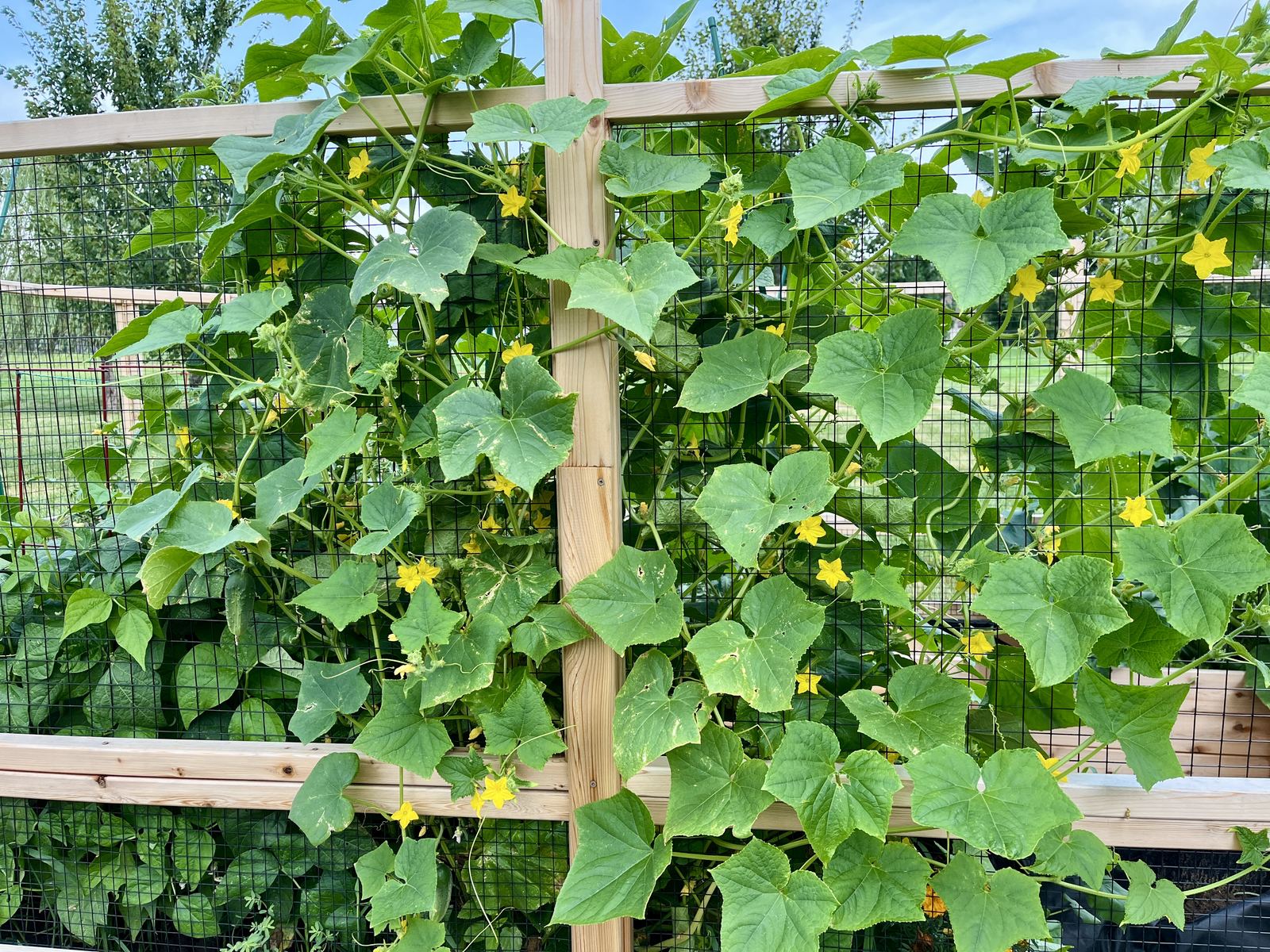
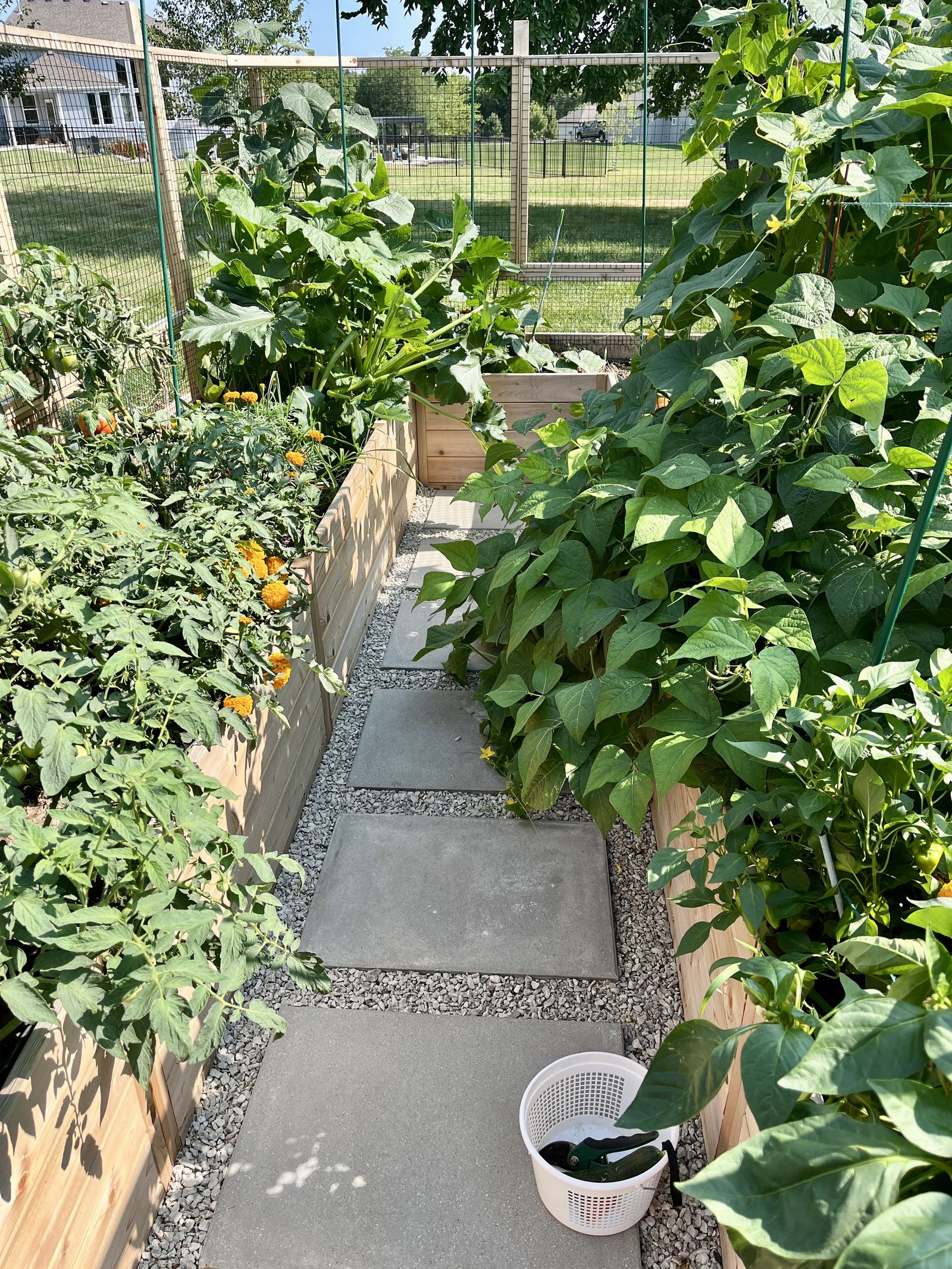
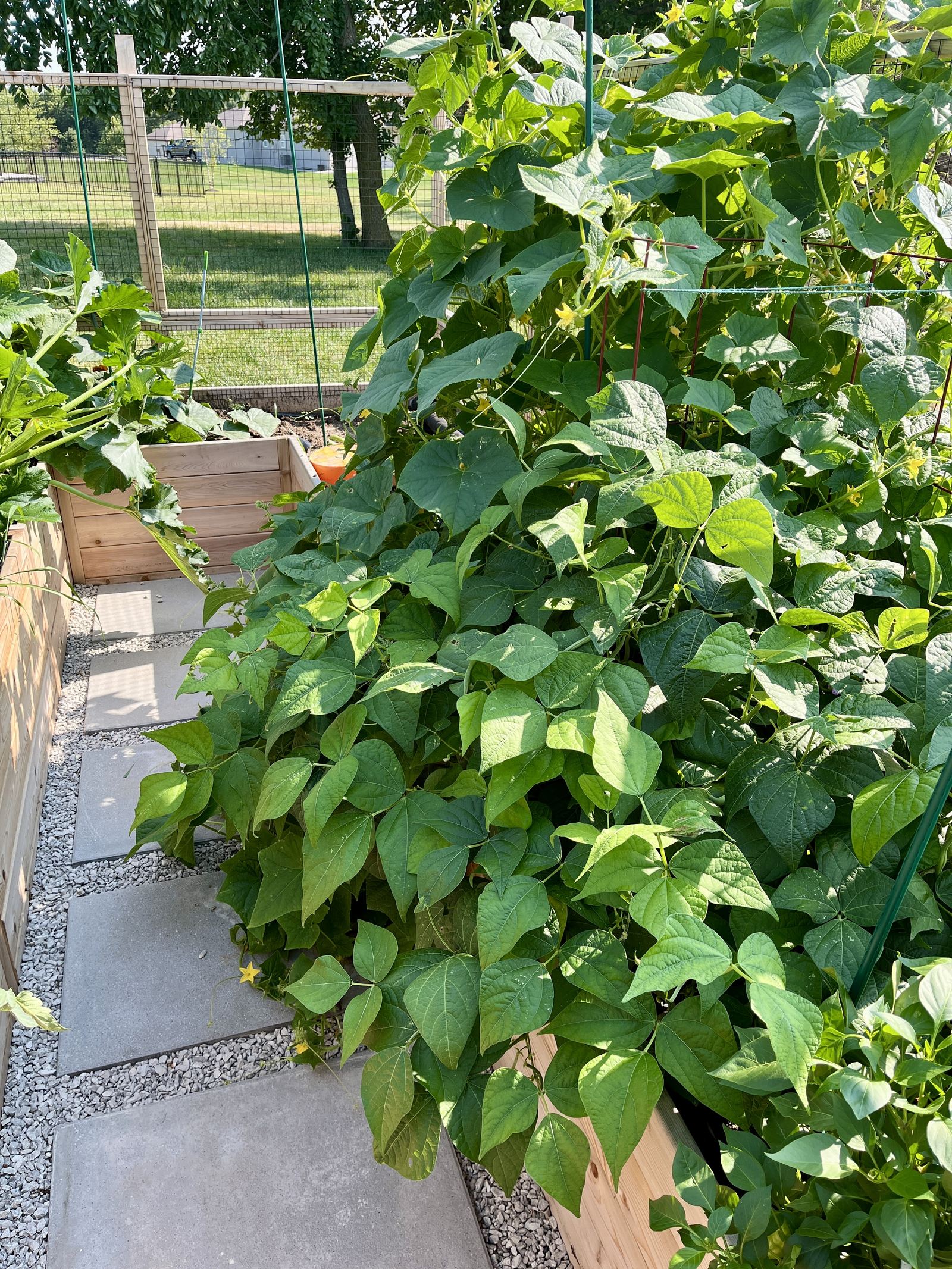
It’s not the first raised bed we’ve had. Back in 2012 I built a much smaller one wedged into the only spot in our old yard that got more than four hours of sun — right next to the driveway. This one gets a real site, a real crew to prep it, and a fence that actually keeps the deer out. Fourteen years is apparently what it takes to go from “good enough spot” to doing it right.